Robotics In Shipbuilding Market Growth: How Shipyard Automation Systems Are Accelerating Global Vessel Production
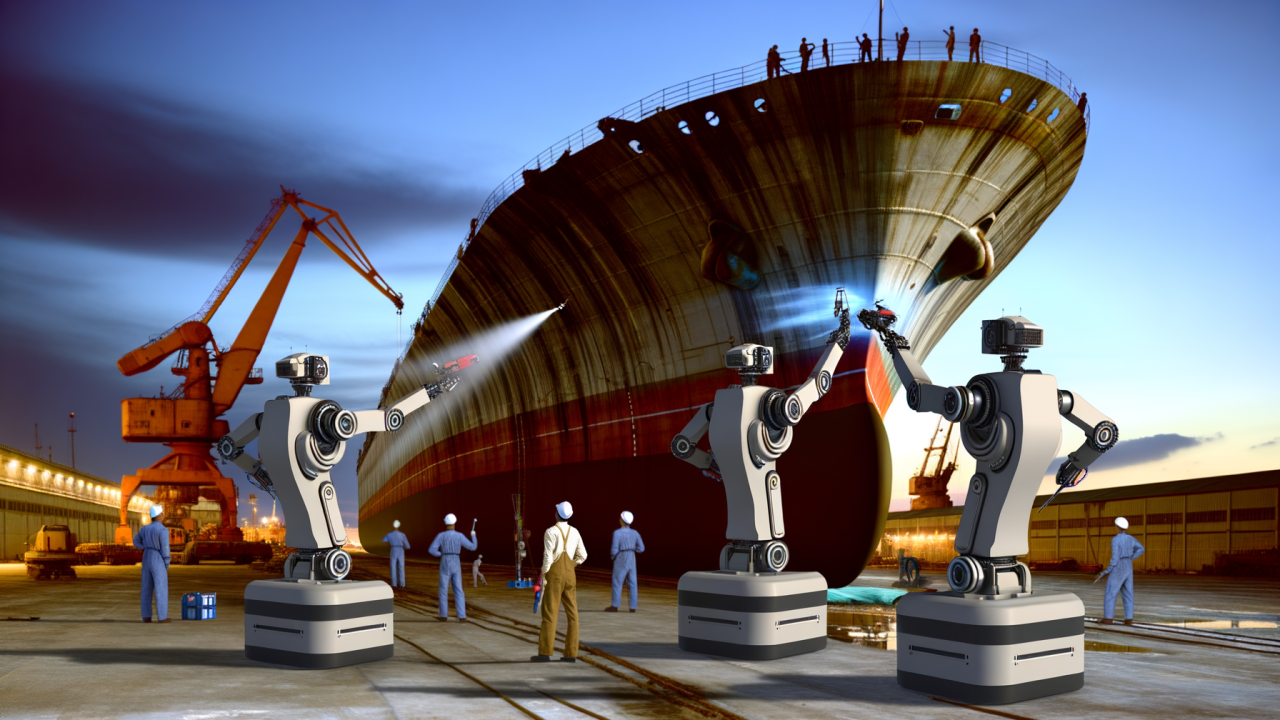
The trajectory of the Robotics In Shipbuilding Market Growth has shifted from gradual to exponential, driven by a perfect storm of labor shortages, rising material costs, and unprecedented demand for new vessels. Shipbuilders who once viewed robots as experimental novelties now consider them essential to survival. This growth is not merely about installing a few welding arms; it represents a fundamental re-engineering of the shipbuilding process, from design software directly to robotic execution. As global order books for containerships, tankers, and specialized vessels swell to multi-year backlogs, the ability to scale production without proportionally scaling labor has become the single most important competitive advantage.
Market Overview and Introduction
The global shipbuilding industry has long been characterized by boom-and-bust cycles, but the current boom is unique because environmental regulations are forcing fleet renewal at the same time that e-commerce demands more capacity. This twin pressure has created a perfect environment for automation. Shipyard automation systems have evolved from simple programmable logic controllers to sophisticated, sensor-rich platforms capable of adaptive welding, cutting, and material handling. Growth is most visible in the prefabrication stage, where robotic hull assembly lines produce giant steel blocks with millimeter precision before they are moved to the dry dock. These systems reduce the time a vessel spends in the most expensive part of construction—the dock—by weeks or even months. According to industry estimates, a fully robotic block assembly line can increase overall yard throughput by 30-40% without adding floor space. This efficiency gain translates directly into revenue, as shipbuilders can accept more orders or deliver early and collect performance bonuses.
Key Growth Drivers
Several specific drivers are fueling this growth. First, the average age of skilled welders in major shipbuilding nations is over 50, and young workers are reluctant to enter a field perceived as dirty and dangerous. Robotics fills this demographic void. Second, the increasing complexity of vessel designs, including air lubrication systems and advanced double-hull configurations, demands repeatable precision. Third, the rise of “mega-blocks” weighing over 1,000 tons each requires automated welding robots that can operate on vertical and overhead surfaces without fatigue. Fourth, shipowners are imposing liquidated damages for delays, making schedule certainty more valuable than ever. Finally, the COVID-19 pandemic exposed the fragility of manual production lines; yards with higher automation levels suffered less disruption and rebounded faster, providing a powerful case study for laggards.
Consumer Behavior and E-commerce Influence
While shipbuilders do not sell directly to consumers, the end users of vessels—shipping lines like Maersk, MSC, and CMA CGM—are profoundly influenced by consumer behavior. The surge in online shopping during and after the pandemic created chronic capacity shortages, leading shipping lines to place record-breaking orders for new ships. These contracts often include clauses requiring the use of advanced manufacturing techniques, including robotics, to ensure quality and speed. Furthermore, the rise of “just-in-time” inventory systems in global supply chains means that any delay in ship delivery cascades into delays for thousands of consumer products. As a result, shipowners are willing to pay a premium for yards that can guarantee faster build times using industrial robotic fabrication. This has created a virtuous cycle: more demand leads to more investment in automation, which leads to faster deliveries, which attracts more orders.
Regional Insights and Preferences
Growth rates vary significantly by region. In Asia, particularly China, growth is being driven by massive state-backed initiatives to modernize every major yard. Chinese shipbuilders have moved from copying Japanese and Korean designs to developing their own marine manufacturing robotics ecosystems, including indigenous controllers and end effectors. South Korea’s growth is more measured but highly sophisticated, focusing on autonomous robotic systems for LNG carrier construction, the most profitable segment. Japan’s growth is driven by labor demographics; with one of the oldest workforces in the world, Japanese yards have no choice but to automate. In Europe, growth is concentrated in high-margin niche segments like naval vessels and expeditionary cruise ships, where robotic systems must handle exotic materials like Invar and stainless steel. The Middle East, particularly the UAE, is seeing emerging growth as it builds its own shipbuilding and repair industry from scratch, leapfrogging directly to fully automated facilities. Africa and Latin America remain minimal but are beginning to invest in small-scale robotic cells for repair and maintenance.
Technological Innovations and Emerging Trends
The growth of this market is inseparable from technological innovation. One of the most impactful trends is the development of “digital twin” shipyards, where every robotic movement is simulated before physical execution. This reduces trial-and-error waste and allows for offline programming that can be optimized for speed and energy efficiency. Another innovation is the use of collaborative robots (cobots) for tasks like tack welding and inspection, where human oversight is still valuable. Sensor fusion—combining LiDAR, thermal imaging, and force torque sensors—allows automated welding robots to adapt to gaps, misalignments, and material variations in real-time. Additionally, cloud-based robot fleet management systems enable a single engineer to monitor and control dozens of robots across a large yard from a tablet. The emergence of 5G private networks in shipyards has been a game-changer, providing the low-latency, high-bandwidth connections needed for real-time robot coordination. Finally, additive manufacturing (3D printing) robots are beginning to appear for producing custom brackets and small parts on-demand, reducing inventory and lead times.
Sustainability and Eco-friendly Practices
Sustainability is not just a regulatory burden; it is a growth driver for robotics. Automated systems inherently produce less waste, consume less energy, and generate fewer emissions. For example, robotic plasma cutting systems optimize nesting of steel plates, reducing scrap by up to 25% compared to manual layout. Robotic welding uses precisely the amount of filler metal and shielding gas needed, avoiding the overuse common with manual welders. In surface preparation, robotic blasting and painting systems recover and reuse abrasive media and overspray, cutting material consumption by half. These efficiencies translate into lower carbon footprints for the shipyard and for the finished vessel, which is increasingly a marketing advantage. Some European shipyards now market their vessels as “robot-built” to environmentally conscious charterers and cargo owners. Furthermore, robotic systems can operate in the dark, allowing yards to shift energy-intensive processes to off-peak hours when electricity is greener and cheaper.
Challenges, Competition, and Risks
Despite rapid growth, challenges abound. The most immediate is the high capital expenditure required for full yard automation, which can be a barrier for small and medium-sized yards. There is also a significant risk of “technology lock-in,” where a yard becomes dependent on a single robot vendor’s proprietary software and spare parts, leading to high long-term costs. Competition among robot suppliers is intense, with traditional industrial giants competing against agile marine-focused startups, leading to price wars that can benefit buyers but squeeze vendor profitability. Another risk is the potential for job displacement, which can lead to union resistance and political backlash, especially in regions with strong labor protections. Cybersecurity is a growing concern; a ransomware attack on a robotic welding cell could halt production for days while systems are restored. Finally, the cyclical nature of shipbuilding means that a global recession could lead to canceled orders, leaving yards with expensive, underutilized robots.
Future Outlook and Investment Opportunities
The growth outlook for this market remains strongly positive for the next decade. The most attractive investment opportunities are in modular robotic systems that can be deployed incrementally, allowing yards to automate one production cell at a time without massive upfront costs. Another growth area is robotic retrofitting of existing vessels, as shipowners seek to extend the life of older ships with automated weld repairs and coating removal. Software and simulation tools represent a high-margin opportunity, as every robot needs programming and optimization. Geographic hotspots for investment include Vietnam and India, where low labor costs are rising and yards are beginning to automate to remain competitive. Additionally, the offshore wind sector, which requires specialized installation vessels, is creating new demand for shipbuilding robotics. Investors should also watch for consolidation among robot suppliers as the market matures, with larger players acquiring niche marine robotics firms to gain specialized expertise.
Conclusion
The Robotics In Shipbuilding Market Growth is a direct response to structural changes in global labor, trade, and environmental policy. As shipyards face relentless pressure to build more vessels, faster and cleaner, robotics offers the only scalable solution. While challenges like cost and integration complexity remain, the long-term direction is clear: the shipyard of the future will be a symphony of automated systems, with humans supervising rather than performing manual tasks.
➤➤Explore Market Research Future- Related Ongoing Coverage In Semiconductor Industry:
Us Industrial Wireless Solution Market
Categories
Read More
A recent federal analysis uncovers a striking and unexpected pattern. As agencies invest more heavily in cybersecurity awareness programs, their adherence to mandated security protocols actually diminishes. This inverse relationship, documented in an official government report, presents a clear challenge to conventional training approaches.A recent report to the House Government Management...

Crimson Blaze arrives in Pokémon TCG Pocket this December. The new booster pack brings a wave of laboratory-themed cards to the digital collection. Leading the charge are iconic Mega Evolutions, including Mega Charizard Y. They are joined by Mega Venusaur and Mega Blastoise, completing the classic trio. Players can acquire these powerful cards starting on the 17th of December. A newly...
The production team includes director Mark Raso, known for his work on Kodachrome, alongside screenwriters Greg Poirier, Joseph Raso, and Mark Raso himself. Entertainment One (eOne) serves as the production company, with Paul Schiff taking on producer responsibilities. A robust lineup of executive producers features Mark Gordon, Josh Phillips, Matt Jackson, Greg Poirier, Mark Raso, Joseph...
Based on the gripping novel by internationally acclaimed author Karin Slaughter, Netflix has greenlit a new thriller series that promises to captivate audiences worldwide. The project brings together an impressive lineup of creative talent, with Lesli Linka Glatter, Charlotte Stoudt, and Bruna Papandrea serving as executive producers for this eight-episode adaptation. Karin Slaughter's source...
UK Security Watchdog Raises Concerns Over Encrypted App Development Security experts are alarmed by a recent statement from the UK's independent reviewer of national security legislation suggesting that creating secure messaging applications could potentially be classified as "hostile activity" under current laws. Jonathan Hall KC's latest assessment of the Counter-Terrorism and Border...