10 Most Effective Submissions for Small BJJ Players
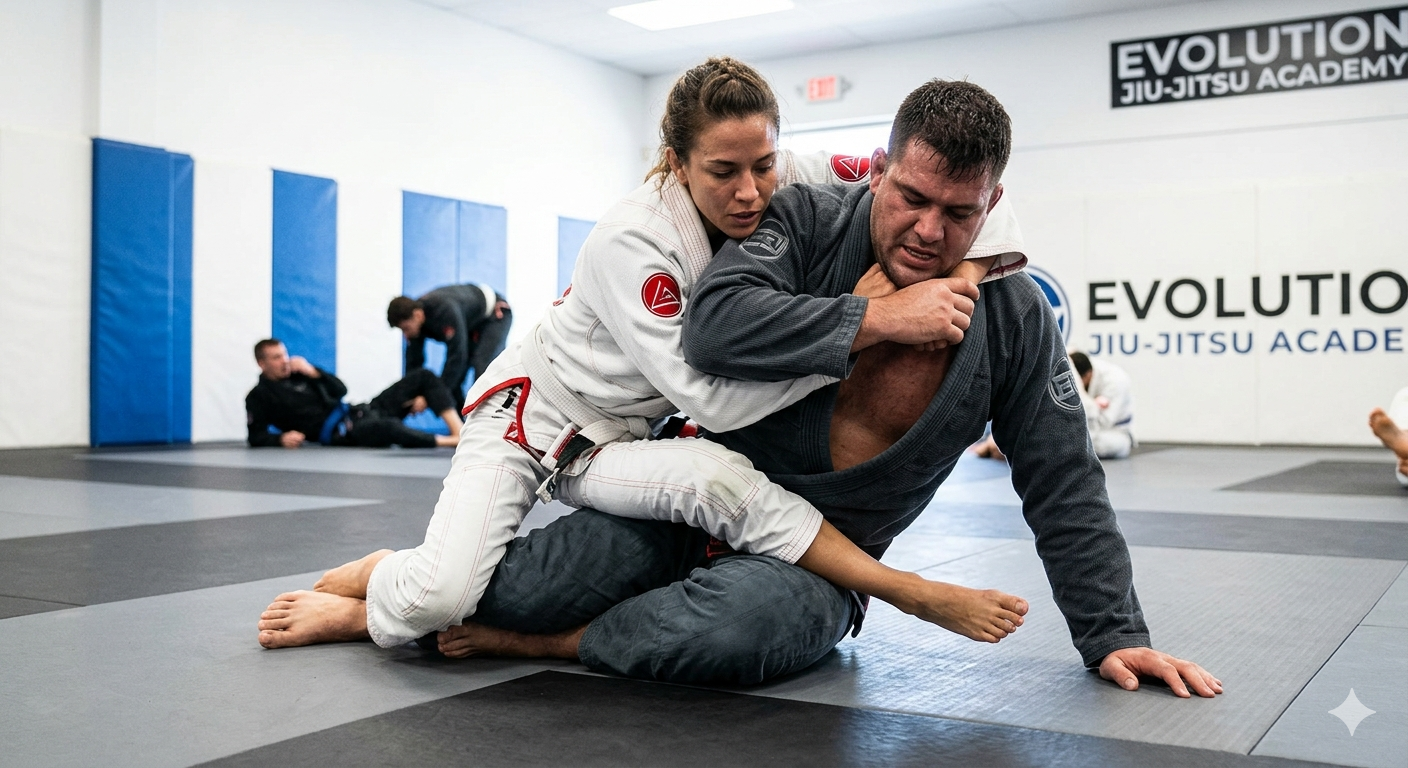
The art of Brazilian Jiu-Jitsu was founded on a singular, revolutionary premise: a smaller, weaker person can successfully defend themselves against a bigger, stronger opponent by using leverage and proper technique. This philosophy, famously championed by the founders of the art, remains the cornerstone of modern grappling. However, anyone who has spent time on the mats knows that while the theory is sound, the practice is grueling. When you are the smaller person in the room, every pound of your opponent’s weight feels amplified. Every cross-face feels like a ton of bricks, and every scramble feels like a battle against gravity itself.
To excel as a lightweight or featherweight practitioner, you cannot simply mimic the game of a heavyweight. You must adapt. You must prioritize techniques that do not rely on squeezing power or raw limb strength, but rather on mechanical advantages that neutralize size. Success for the smaller grappler is found in the "great equalizers," which are specific submissions and setups that turn an opponent's mass into a liability.
According to the technical history of Brazilian Jiu-Jitsu, the focus has always been on ground fighting and submission holds. For the smaller player, this means finding the path of least resistance. In this comprehensive guide, we will explore the ten most effective submissions for smaller BJJ players, the strategic mindset required to hunt them, and how to build a game that keeps you safe while remaining dangerous.
The Philosophy of the Smaller Grappler: Speed, Frames, and Leverage
Before diving into the specific submissions, it is vital to understand the tactical framework that a smaller player must adopt. If you weigh 140 pounds and your training partner weighs 210 pounds, you are not playing the same game. You are playing a game of "frames" versus "pressure."
The Power of the Frame
A frame is a structural alignment of your bones that prevents an opponent’s weight from crushing your muscles. Smaller players must become masters of the frame. Instead of pushing with your triceps, you prop your elbows and knees in positions where the opponent’s weight is transferred directly into the floor. This preserves your energy. In BJJ, the person who tires first is usually the person who loses. By using skeletal alignment, you stay fresh while the larger opponent burns oxygen trying to compress you.
Movement Over Static Control
Larger players can often afford to be "heavy." They can pin an opponent and wait for an opening. A smaller player rarely has this luxury. If you stay static under a larger opponent, they will eventually find a way to flatten you. Your greatest weapons are movement and transitions. You must be the "ball of energy" that is impossible to pin down. This fluid movement is what leads to the scrambles where the most effective submissions for small players are found.
The Search for the "Best Jiu Jitsu Gym Near Me"
The environment in which you train determines your longevity. For a smaller practitioner, finding a gym with a culture of technical proficiency rather than "meathead" aggression is crucial. When searching for the best jiu jitsu gym near me, look for schools that emphasize drilling and positional sparring. A gym that understands the needs of smaller players will teach you how to survive before they teach you how to finish. This safe, technical environment allows you to develop the attributes needed to take down the giants in your class.
10 Most Effective Submissions for Small BJJ Players
1. The Rear Naked Choke (The Great Equalizer)
The Rear Naked Choke (RNC) is universally regarded as the most effective submission in all of grappling. For the smaller player, it is the ultimate weapon because it does not require you to be stronger than your opponent. Once you have taken someone’s back, their size becomes largely irrelevant. You are attacking the neck, a structure that cannot be "bulked up" with muscle to resist a blood choke.
The key for the smaller player is the "seatbelt" control. By maintaining a tight chest-to-back connection, you stay glued to the opponent regardless of how much they thrash or roll. The RNC allows you to use your entire upper body strength against the small diameter of the opponent's throat.
2. The Triangle Choke
The triangle choke is a classic example of using the strongest part of your body (your legs) against a weaker part of the opponent’s body (their neck and one arm). Smaller players often have the advantage of dexterity and "long" legs relative to their frame, which makes the triangle an ever-present threat.
To finish a larger opponent, you must focus on the angle. If you stay directly in front of a big person, they can stack you and put immense pressure on your neck. By cutting a 90-degree angle and grabbing your own shin, you disappear from their line of power and create a suffocating clamp that few can escape.
3. The Bow and Arrow Choke
In Gi Jiu-Jitsu, the Bow and Arrow choke is arguably the most powerful finishing move available. It utilizes the leverage of the lapel to create a terrifying amount of torque. For a smaller player, this is ideal because the Gi acts as a force multiplier.
By grabbing the opponent’s far pant leg and their opposite lapel, you create a stretching motion that makes it impossible for the opponent to turn into you or away from you. Even if there is a 50-pound weight difference, the mechanical advantage of the lapel pull will overcome their neck muscles every time.
4. The Guillotine Choke
The guillotine is the "speedster’s" submission. It often presents itself during transitions, specifically when a larger opponent attempts a sloppy double-leg takedown. For the smaller player, the guillotine is a way to use the opponent’s forward momentum against them.
Focus on the "high-elbow" or "Marcelotine" variation. This version tucks the opponent’s head in a way that prevents them from "popping" their head out and passing your guard. It is a submission that relies on timing and "chin-strap" control rather than arm strength.
5. The Heel Hook
In the modern era of submission grappling, the heel hook has become the great leveler. Leg locks, in general, are highly effective for smaller players because they target the extremities. As the legendary John Danaher points out, the legs are the strongest part of the body, but the joints within them are vulnerable to twisting forces.
When you enter into an "Asami" or "Honey Hole" position, you are isolating the opponent’s leg with your entire body. A 150-pound person using their hips, core, and arms can easily generate enough force to break the ligaments in a 250-pound person’s knee. It is a technical equalizer that has changed the landscape of professional grappling.
6. The Armbar from Guard
While the armbar is a fundamental move, it remains highly effective for smaller players who possess high hip mobility. The secret to finishing a larger opponent with an armbar is not pulling with your arms; it is the "bite" of your legs.
By heavying your legs on the opponent’s head and back, you make your body weight feel much heavier than it actually is. This prevents them from standing up and stacking you. If you can transition your hips effectively, the armbar becomes a surgical tool that dismantles the opponent's posture.
7. The Kimura (As a Control Tool)
Most people think of the Kimura as a shoulder lock, but for the small player, it is primarily a powerful handle. By securing the "Figure-Four" grip on an opponent’s arm, you gain control over their entire torso.
You can use the Kimura to sweep a larger opponent, take their back, or transition into a T-Kimura position. If the submission finish isn't there due to the opponent’s sheer arm size, the control it provides allows you to stay ahead in the scramble and find other openings.
8. The Loop Choke
The loop choke is a "sneaky" submission that smaller players can use to catch larger opponents off-guard. It involves "looping" your own arm over the opponent's head while holding their lapel.
This submission is particularly effective because it can be hit from the bottom, top, or even while being passed. Larger players often feel safe when they are in your half-guard or passing your guard; the loop choke punishes that overconfidence. It uses the Gi to create a sudden, tight circle around the neck that results in a very quick tap.
9. The Darce Choke
The Darce choke is perfect for long-limbed smaller players. It is typically found during scrambles or when an opponent is trying to get an underhook from the bottom. Because it relies on "threading the needle" through small gaps in the opponent's defense, a smaller person’s thinner arms can often slide into place more easily than a heavyweight’s "tree-trunk" arms.
The Darce utilizes a locking mechanism that squeezes the carotid arteries using the opponent’s own shoulder as one of the pressure points. This makes it an incredibly efficient way to end a fight.
10. The Omoplata
The Omoplata is often dismissed as a "low-percentage" move, but for the small grappler, it is an essential part of the arsenal. Like the Kimura, the Omoplata is as much a sweep and a control position as it is a submission.
By using your legs to isolate the opponent's shoulder, you can break their posture and force them to the mat. For a smaller player, the Omoplata offers a way to get out from underneath a heavy opponent and move into a dominant position. If the opponent is flexible and doesn't tap, the resulting sweep is just as valuable.
Strategic Implementation: How to Hunt the Finish
Knowing the submissions is only half the battle; the other half is creating the conditions where they can be applied. For the smaller player, this involves a specific "Game Plan" that emphasizes safety and tactical patience.
Managing the Distance
Distance is your best friend or your worst enemy. When you are far away, the larger opponent cannot use their weight. When you are "chest-to-chest," you are in the danger zone. Smaller players should focus on "Open Guard" variants like De La Riva, Spider Guard, or Butterfly Guard. These guards allow you to use your feet as "stoppers" to keep the opponent’s weight off your torso.
The "Nezumi" (Mouse) Mentality
In Japanese martial arts, there is often a focus on being "elusive." As a smaller grappler, you must be comfortable with the idea that you will not "win" the pressure battle. Instead, you win by being where the opponent isn't. When they push, you pull; when they heavy up on one side, you scoot to the other. This constant redirection of energy is what creates the "gaps" where the submissions listed above can be slipped in.
Recent Trends in Lightweight Success
If we look at current trends in combat sports, we see that lighter divisions are often characterized by higher submission rates and more dynamic movement. The "modern" game involves a lot of inversion and back-taking, which are strategies perfectly suited for those who don't want to engage in a wrestling match against a giant. These trends highlight that the technical ceiling for smaller players is incredibly high.
Training for Longevity as a Small Practitioner
If you are the smallest person in your gym, you are essentially a "crash test dummy" for the heavyweights. This can lead to burnout or injury if you are not careful.
Selective Sparring
It is okay to be selective about who you roll with, especially if you are returning from an injury or if a certain training partner is known for being reckless with their weight. A good coach will understand that a 110-pound woman should not be "smash-tested" by a 250-pound beginner every single day.
Strength and Conditioning
While BJJ is about technique, being "strong for your size" is a massive advantage. Focus on functional strength; pull-ups, deadlifts, and core stability are essential. A strong neck and core will help you absorb the "incidental" pressure that comes with rolling with larger people. The more "armor" you have in the form of muscle, the less likely you are to suffer from the nagging rib and neck injuries common in smaller grapplers.
Finding Your Tribe
Again, the importance of your training environment cannot be overstated. When you look for the best jiu jitsu gym near me, look for a place that has a diverse range of body types. If everyone in the gym is a heavyweight, you will have a hard time finding partners who can push your speed and technical precision. A gym with a strong "lightweight" contingent will help you sharpen the specific tools needed for your body type.
Conclusion: Embodying the Art
Being a small BJJ player is a challenge, but it is also a gift. It forces you to be more technical, more patient, and more creative than those who can rely on their size. The ten submissions outlined here—from the Rear Naked Choke to the Omoplata—are your tools for navigating a world of giants.
By focusing on leverage, maintaining your frames, and choosing a training environment that supports your growth, you can transform from a "prey" animal into a "predator" on the mats. Jiu-Jitsu is a lifelong journey of self-discovery; for the smaller player, that journey is paved with the satisfaction of proving that technique truly does conquer all.
Κατηγορίες
Διαβάζω περισσότερα
Hysilens Team Strategies Unleash the potential of Hysilens, a Nihility specialist who thrives on Damage Over Time in Honkai: Star Rail. For a formidable build, prioritize the Prisoner in Deep Confinement relic set to shred enemy DEF with her DoTs. The Pan-Galactic Commercial Enterprise planar set is ideal, boosting her Effect Hit Rate and converting it into a potent ATK increase. Her best...
In the intense battles of Last Z: Survival Shooter, your hero's leadership sets the stage, but it’s the composition and strength of your troops that truly determine victory. Whether you’re engaging in PvP duels, participating in arena tournaments, or tackling kill events, selecting the right troop units is essential. Strategic troop deployment hinges on more than just increasing...
Starting July 12th, London’s Covent Garden will host an exciting new photographic exhibition dedicated to the enchanting world of Harry Potter. Visitors can explore a collection of captivating images that showcase the magic behind the scenes, including exclusive photos and special photo opportunities designed for fans to enjoy. This immersive exhibition offers a unique chance to relive...
Entdecke die vollständige Liste der Karten aus dem neuen Pokémon TCG Pocket-Set B1 „Mega-Aufstieg“ in unserer aktuellen Übersicht. Diese Erweiterung erscheint am 30. Oktober 2025 und bringt eine spannende Neuerung: die Einführung der Mega-Pokémon-EX. Bereite dich auf packende Duelle vor, bei denen mächtige Kämpfer wie Mega-Garados-EX,...
Wagner Moura Takes on Role of Legendary UN Diplomat in New Netflix Project Brazilian actor Wagner Moura, known for his portrayal of Pablo Escobar in the hit series "Narcos," is set to star in an upcoming biographical film for Netflix about Sergio Vieira de Mello, the renowned United Nations diplomat who lost his life in a 2003 terrorist attack in Baghdad. The untitled project marks the...