The Complete Resin Solution: How Cyanate Ester Resin and Advanced Composite Materials Are Building the Future of High-Performance Systems
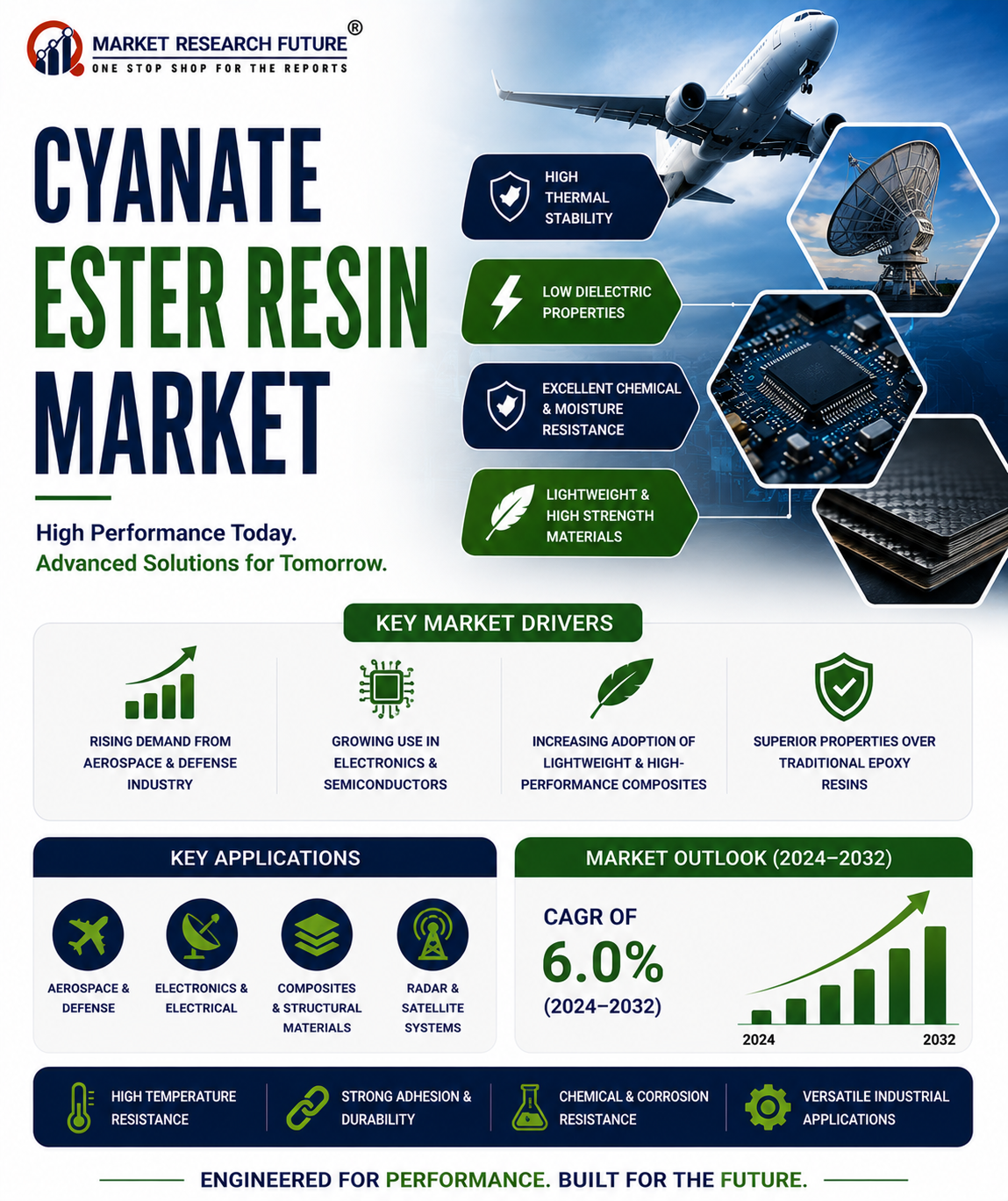
Cyanate ester resin has emerged as a cornerstone material for advanced applications across aerospace, electronics, automotive, and telecommunications industries, offering an exceptional combination of thermal stability, mechanical strength, and electrical properties that few materials can match. These versatile resins, characterized by their ability to maintain performance at high temperatures while providing low dielectric properties, have become essential for the most demanding applications. The cyanate ester resin market reached an estimated USD 1,446.64 million in 2024 and is projected to grow to USD 2,400.61 million by 2035, registering a CAGR of 4.71%. At the foundation of the future of advanced materials are cyanate ester resin and advanced composite materials, which together are building the next generation of high-performance systems and components.
The Foundation: Cyanate Ester Resin
Cyanate Ester Resin represents the cornerstone of high-performance thermoset materials, offering unparalleled thermal stability, mechanical strength, and electrical properties that meet the stringent requirements of modern engineering applications. These resins, characterized by their highly cross-linked polymer networks, provide exceptional dimensional stability, thermal resistance up to 300°C, and low dielectric properties that make them ideal for aerospace composites and high-frequency electronics. The aerospace segment dominates the market, driven by the need for lightweight and durable materials used in aircraft construction and components where stringent safety and performance standards are critical. The exceptional performance of cyanate ester resins in extreme environments makes them indispensable for next-generation aerospace and defense systems.
The foundation of cyanate ester resin technology is built on continuous innovation in polymer chemistry and formulation science. Research and development efforts are focused on enhancing the properties of these resins, leading to new formulations that offer improved thermal stability, enhanced adhesion, and better processing capabilities. The development of sustainable and bio-based cyanate esters is also gaining traction, supporting environmental goals while maintaining the exceptional performance characteristics that make these resins invaluable. The electronics industry is witnessing substantial growth due to the increasing demand for high-performance materials that support the complexity and miniaturization of electronic devices.
The Structure: Advanced Composite Materials
Advanced Composite Materials represent the cutting edge of cyanate ester resin applications, combining the exceptional properties of these resins with reinforcing fibers to create materials that exceed the capabilities of conventional metals and polymers. These composites, which leverage cyanate esters as the matrix material, provide outstanding strength-to-weight ratios, thermal stability, and design flexibility that enable innovation across industries. Composite materials hold the largest share in the end-use segment, reflecting their widespread application in high-performance industries such as aerospace and automotive where they leverage superior mechanical properties, thermal stability, and lightweight characteristics.
The structure of advanced composite materials is characterized by the synergistic combination of cyanate ester resins with reinforcing fibers such as carbon, glass, and aramid. This combination creates materials that offer superior mechanical performance, thermal stability, and durability while maintaining the low dielectric properties essential for electronics and telecommunications applications. The aerospace industry is driving significant demand as manufacturers seek to improve fuel efficiency and overall performance through lightweight, high-strength materials. The automotive industry is increasingly adopting these materials to enhance fuel efficiency and performance, driven by stringent environmental regulations and consumer demand for sustainable solutions.
Key Applications Driving Market Growth
Cyanate ester resin and advanced composite materials find applications across diverse industries and systems. In aerospace applications, cyanate ester composites enable lightweight, durable structures that withstand extreme temperatures and mechanical stresses, contributing to fuel efficiency and performance improvement. The aerospace sector remains the largest market, driven by the need for materials that can meet the demanding performance requirements of modern aircraft. In electronics, cyanate ester composites provide the thermal stability and dielectric properties essential for high-performance components and printed circuit boards.
The automotive industry is increasingly adopting cyanate ester composites for lightweight and durable properties essential for enhancing fuel efficiency and performance. Emerging applications in renewable energy, such as wind turbine blades and solar panel components, are utilizing these materials due to their superior mechanical properties and resistance to environmental degradation. The telecommunications sector represents a significant and growing application area, with advanced composite materials supporting high-frequency communication infrastructure.
Benefits of Cyanate Ester Composites
The benefits of cyanate ester resin and advanced composite materials extend across thermal stability, mechanical strength, design flexibility, and reliability. Exceptional thermal stability enables reliable operation at elevated temperatures up to 300°C, making these materials suitable for the most demanding environments. Superior mechanical strength provides load-bearing capability and durability, enabling lightweight designs that reduce weight without compromising structural integrity. Design flexibility allows for complex geometries and optimized performance characteristics that are impossible with conventional materials. Enhanced reliability ensures long-term performance in critical systems, reducing maintenance requirements and lifecycle costs.
The adoption of these materials supports innovation and competitive advantage across industries. The development of new composite formulations with improved properties is expanding the application range and enabling more efficient designs. The focus on sustainability is driving research into bio-based and recyclable composite materials that reduce environmental impact while maintaining performance. The lightweight nature of these composites contributes significantly to fuel efficiency and emissions reduction in transportation applications.
Future Trends and Opportunities
The future of cyanate ester resin and advanced composite materials is characterized by continued innovation in chemistry, processing, and applications. Development of next-generation cyanate ester formulations for emerging applications is creating new opportunities in areas such as additive manufacturing, high-temperature electronics, and space exploration. Expansion into emerging markets with tailored product offerings is meeting specific regional needs in Asia-Pacific and other rapidly developing regions. Investment in sustainable manufacturing processes is supporting environmental goals and attracting eco-conscious clients.
The integration of digital technologies in composite manufacturing is enabling more efficient production and quality control. The development of self-healing and smart composite materials is opening new possibilities for structural health monitoring and adaptive systems. Manufacturers that invest in innovative Cyanate ester resin and Advanced Composite Materials will be well-positioned to lead the advanced materials industry, delivering the high-performance, reliable solutions demanded by next-generation aerospace, electronics, automotive, and telecommunications applications. By 2035, the market is expected to achieve robust growth, driven by innovation and strategic investments in material technologies that enable more capable, efficient, and sustainable systems.
Κατηγορίες
Διαβάζω περισσότερα
Looking for a quick Netflix fix? These compact series are perfect for those who want to complete an entire show without dedicating weeks or months to the task. From limited series with just a handful of episodes to short-season gems that wrap up their stories efficiently, these selections offer satisfying viewing experiences that fit neatly into a weekend schedule. Whether you're into intense...

May 2018 Netflix ISP Performance Report: Global Speed Trends In the latest Netflix streaming performance data, significant shifts occurred across global markets during May 2018. The monthly ISP Speed Index revealed notable movements in both individual provider performance and country rankings. Malaysia emerged as a standout performer, climbing an impressive eleven positions to secure 21st...
Antitrust specialists monitoring the European Union foresee minimal risk of regulators halting Netflix's colossal acquisition of Warner Bros. Discovery assets. The $83 billion transaction promises seismic shifts in entertainment, merging powerhouse franchises under one roof. Conditions rather than rejection loom as the probable outcome. Competition economist Cristina Caffarra notes EU...
Please ensure that your coverage includes a link to www.netflix.com/whatif for reference. Jane Levy, known for her roles in Castle Rock and Suburgatory, has been cast as Lisa in the upcoming ten-episode social thriller series, What / If. She joins Renée Zellweger, who will portray the character Anne, in the series. The project is created and executive produced by Mike Kelley, who also...
In the fast-paced, interconnected world of modern commerce, business travel is the lifeblood that fuels growth, fosters relationships, and drives innovation. Managing the immense complexity and cost associated with this travel has given rise to the indispensable global Travel Management Software industry. This technology represents a comprehensive platform designed to orchestrate the...