The Mind's Frontier: Inside the Global Brain Computer Interface Industry
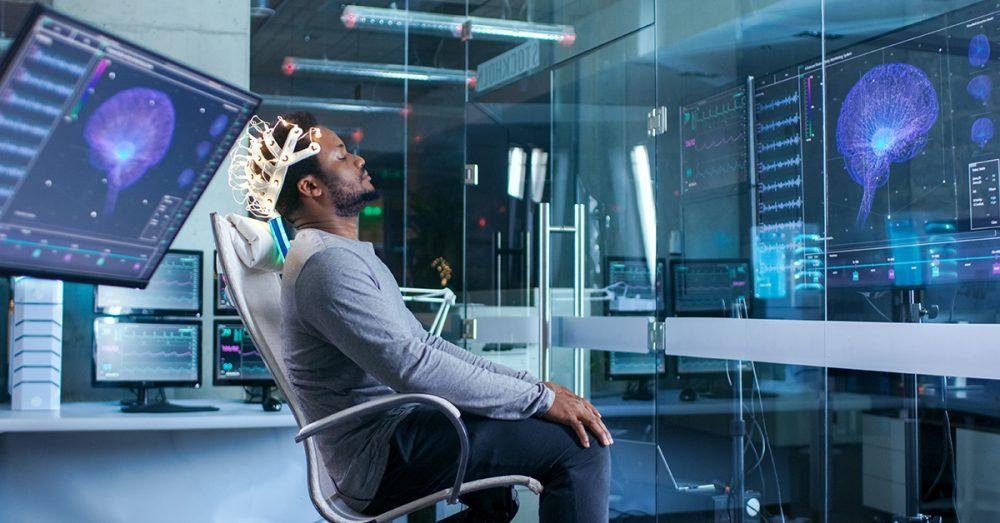
The global Brain Computer Interface industry represents one of the most profound and futuristic frontiers in technology, centered on creating a direct communication pathway between the human brain and an external device. This revolutionary sector, often abbreviated as BCI, is developing systems that can acquire, analyze, and translate brain signals into commands that can control computers, prosthetic limbs, or other machines, without any involvement of the peripheral nervous system or muscles. The industry encompasses a wide range of technologies, from non-invasive methods like electroencephalography (EEG) that use scalp-worn sensors, to highly advanced, invasive techniques that involve surgically implanting electrode arrays directly into the brain tissue. While its origins lie in medical research aimed at helping individuals with severe paralysis, the BCI industry's scope is rapidly expanding. It now includes applications in gaming, virtual reality, neuro-marketing, and cognitive enhancement. This is an industry at the very intersection of neuroscience, engineering, and artificial intelligence, holding the potential to not only restore lost function but to fundamentally augment human capabilities and redefine our relationship with technology. It is a field driven by immense scientific curiosity and the profound promise of a future where thought alone can control the digital world.
The core function of the Brain-Computer Interface industry is to act as a translator, converting the complex electrical and electrochemical language of the brain into the binary language of computers. This process involves several key stages. First, brain signals must be acquired. Non-invasive BCIs are the most common and accessible, using techniques like EEG to measure electrical activity from the scalp, or functional near-infrared spectroscopy (fNIRS) to measure blood flow changes in the brain. These methods are safe and easy to use but provide a relatively "noisy" and low-resolution signal. Invasive BCIs, on the other hand, provide a much higher-fidelity signal by placing electrodes directly in contact with the brain. This allows for the recording of signals from individual neurons, enabling a much finer degree of control, but this comes with the significant risks and costs associated with brain surgery. Once the signals are acquired, they are digitized and processed using sophisticated signal processing algorithms to filter out noise and extract the relevant features. Finally, a machine learning or AI-based decoder translates these features into a specific command, such as moving a cursor on a screen or closing the hand of a prosthetic arm.
The primary and most life-changing application of the BCI industry has been in the medical and assistive technology domain. For individuals suffering from severe paralysis due to conditions like amyotrophic lateral sclerosis (ALS), spinal cord injury, or stroke, BCIs offer a beacon of hope for restoring communication and movement. By imagining specific movements, a person can learn to control a computer cursor to type messages, browse the internet, or operate smart home devices, reconnecting them with the world. Even more advanced systems have enabled paralyzed individuals to control sophisticated robotic arms and legs with their thoughts, allowing them to perform tasks like drinking from a cup or even walking again. Beyond motor restoration, BCIs are also being explored for a wide range of neurological and psychiatric applications. This includes using neurofeedback—where a BCI provides real-time information about a person's brain activity—to help them learn to regulate their brain patterns to treat conditions like ADHD, depression, and anxiety. The potential to directly interface with and modulate brain activity makes BCI one of the most promising fields in modern medicine.
While medicine remains the primary driver, the BCI industry is seeing a rapid expansion of its applications into the consumer and enterprise markets, often referred to as "neuro-tech." In the gaming and virtual reality (VR) industries, non-invasive BCI headsets are being developed to create more immersive and intuitive experiences. Imagine controlling a character in a game or navigating a virtual world using only your thoughts, or having the game's difficulty dynamically adjust based on your level of focus or frustration, as measured by your brainwaves. In the field of neuro-marketing, companies are using EEG-based BCIs to measure a consumer's subconscious emotional and attentional response to advertisements and products, providing a deeper level of market research than traditional surveys. There are also emerging applications in areas like cognitive monitoring for high-stakes professions (e.g., pilots or air traffic controllers) to monitor for fatigue or loss of attention, and in education, where BCIs could be used to create adaptive learning systems that tailor content to a student's cognitive state. This expansion into non-medical fields is a key indicator of the industry's long-term potential to become a mainstream technology.
Explore Our Latest Trending Reports:
Blockchain In Smart Home Market
Категории
Больше
Sony revealed on Monday that ongoing investigations into the PlayStation Network breach uncovered additional security issues, including an attack on its Sony Online Entertainment (SOE) multiplayer platform. This breach resulted in the theft of credit card information and banking details of affected users. The announcement compounds the company's troubles, following a Sunday press conference...

When Marvel Rivals launched last December, it quickly ignited the gaming community’s excitement. Early buzz highlighted its stunning character designs and impressive graphics, capturing players’ attention from the start. Once released, millions flocked to experience Netease’s engaging gameplay, which offered a compelling loop that kept players hooked. Despite its popularity,...
Amidst UK efforts to enhance proactive scanning for illegal online content, a critical security gap emerges with popular free file-sharing services. Surfshark's recent analysis of six major platforms reveals a concerning trend: most free versions neglect to scan uploaded files for viruses or malware. This oversight leaves users vulnerable to inadvertently downloading harmful content. Notably,...
As Per Market Research Future, the Commercial Forestry Tools segment highlights tools designed for various forestry applications, including tree planting, maintenance, and harvesting. These tools are essential for ensuring efficiency and effectiveness in forestry operations. The demand for commercial forestry tools is driven by the increasing focus on sustainable forest management and the need...
Netflix is set to produce a new original series, 'A Taiwanese Tale of Two Cities', in partnership with Taiwan's Kbro Media and Good Image Production. This 20-episode project will explore cultural dynamics between Taipei and the Taiwanese-American community in San Francisco. Directed by acclaimed filmmaker Nelson Yeh, the series follows two women who exchange homes, embarking on personal...