Vertical Market Analysis: Identifying the Core Growth Areas and Passive Optical LAN Market Segment Potential
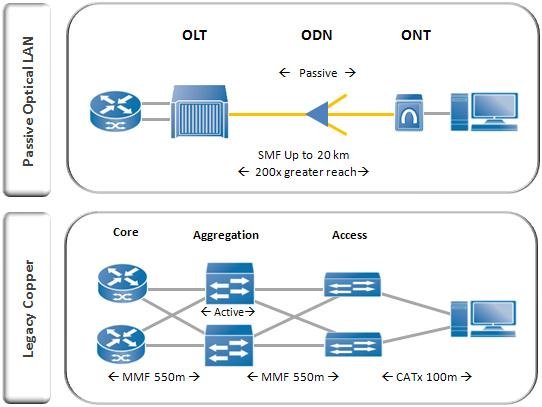
The Passive Optical LAN Market segment for government and defense remains one of the most stable and high-value areas for growth. In these environments, security is the paramount concern. Passive Optical LAN provides a level of physical layer security that is simply unattainable with copper. Because fiber does not emit signals, it is immune to the "sniffing" techniques used to intercept data from copper wires. This makes it the preferred choice for Secure Internet Protocol Router Network (SIPRNet) and Non-classified Internet Protocol Router Network (NIPRNet) installations. Additionally, the longevity of fiber infrastructure aligns with the long-term budget cycles of government agencies. By investing in fiber today, they avoid the need for costly "rip-and-replace" projects in the near future. This segment continues to set the standard for how high-security, high-performance optical networks should be designed and maintained.
In the commercial real estate and "smart office" segment, the focus is more on operational efficiency and tenant experience. Developers are finding that offering a "fiber-ready" building can command higher rents and attract high-tech tenants. The flexibility of POL allows for easy reconfiguration of office layouts; since the network is managed centrally, re-assigning a desk to a different department is a matter of a few clicks in a software interface. This agility is crucial in today’s fast-paced business environment. Furthermore, as sustainability becomes a key metric for corporate investors, the energy-saving properties of POL are a major selling point. By reducing the total power load of the building, POL helps developers achieve LEED certifications and other green building accolades. As the technology matures, we expect to see even more specialized segments emerge, such as industrial POL for manufacturing floors where electromagnetic interference from heavy machinery makes copper networking unreliable.
Why is POL considered more secure for government use? Fiber is non-conductive and does not radiate electromagnetic energy, making it nearly impossible to tap or intercept data without physically breaking the cable and triggering an alarm.
How does POL help in achieving LEED certification? POL contributes to LEED points by significantly reducing energy consumption (for both networking and cooling) and by reducing the total amount of materials (plastic and copper) used in the building.
➤➤➤Explore MRFR’s Related Ongoing Coverage In Semiconductor Industry:
Generative Ai In Fintech Market
Germany Commercial Printing Market
Energy Management System Market
Categorii
Citeste mai mult
The streaming landscape quakes as Netflix confirms its acquisition of Warner Bros., sending shockwaves through global entertainment circles. Reactions paint a deeply divided picture, ranging from profound despair to cautious optimism. Warner Bros. Discovery staff grapple privately with the news, some voicing dismay while others seek clarity. International studio executives acknowledge...

Top US VPNs for Abroad Access Getting access to US-based websites and streaming platforms from abroad can be a challenge, but with the right tools, it’s entirely achievable. One of the most effective solutions involves disguising your real IP address to appear as though you are browsing from within the United States. A Virtual Private Network (VPN) is the most reliable method to obtain a...
Mo Season 2 Preview Mo returns with its unique blend of humor and heart, delving deeper into the life of its resilient lead. Expect more hilarious escapades and genuine connections, as Mo navigates love, family, and friendship in Houston. The series continues to balance comedy with poignant moments, showcasing a journey that resonates with many. New challenges and heartfelt revelations await,...
The Critical Role of Moisture Measurement in an Automated World In an era where precision and environmental control are paramount across industries, the ability to accurately measure and respond to moisture levels has become a cornerstone of modern technology. From ensuring product quality in pharmaceutical manufacturing to optimizing energy efficiency in smart buildings and providing comfort...
Season 7, known as the Season of Witchcraft, has been underway for a while now. The Maxroll team continues to ensure everything runs smoothly, while updates keep coming in regularly. Excitingly, Blizzard has announced the upcoming Diablo 4 Season 7 patch 2.1.2, scheduled for release on February 18th, just days away! Several issues have been resolved to improve your gameplay. The bloodhorn boss...